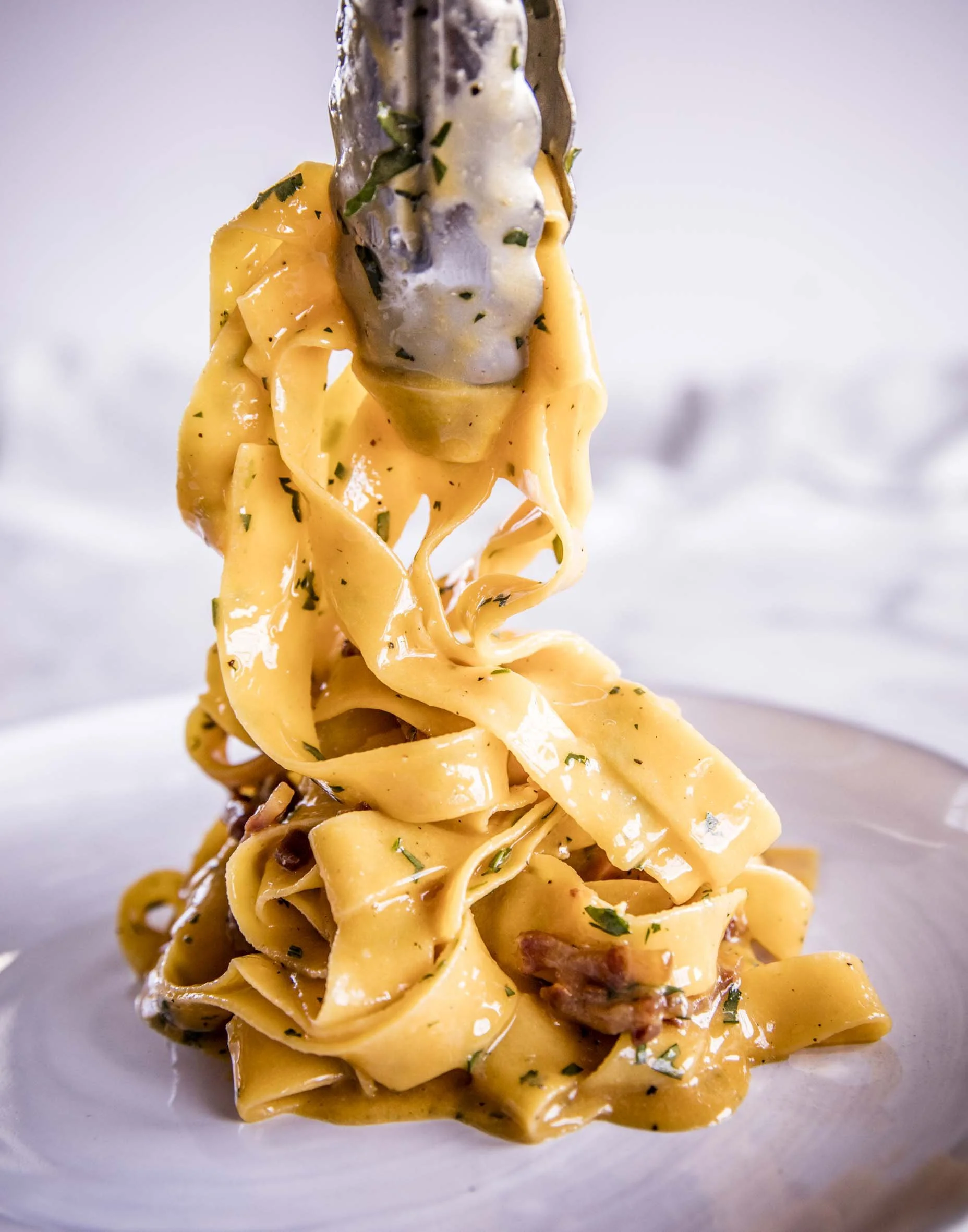
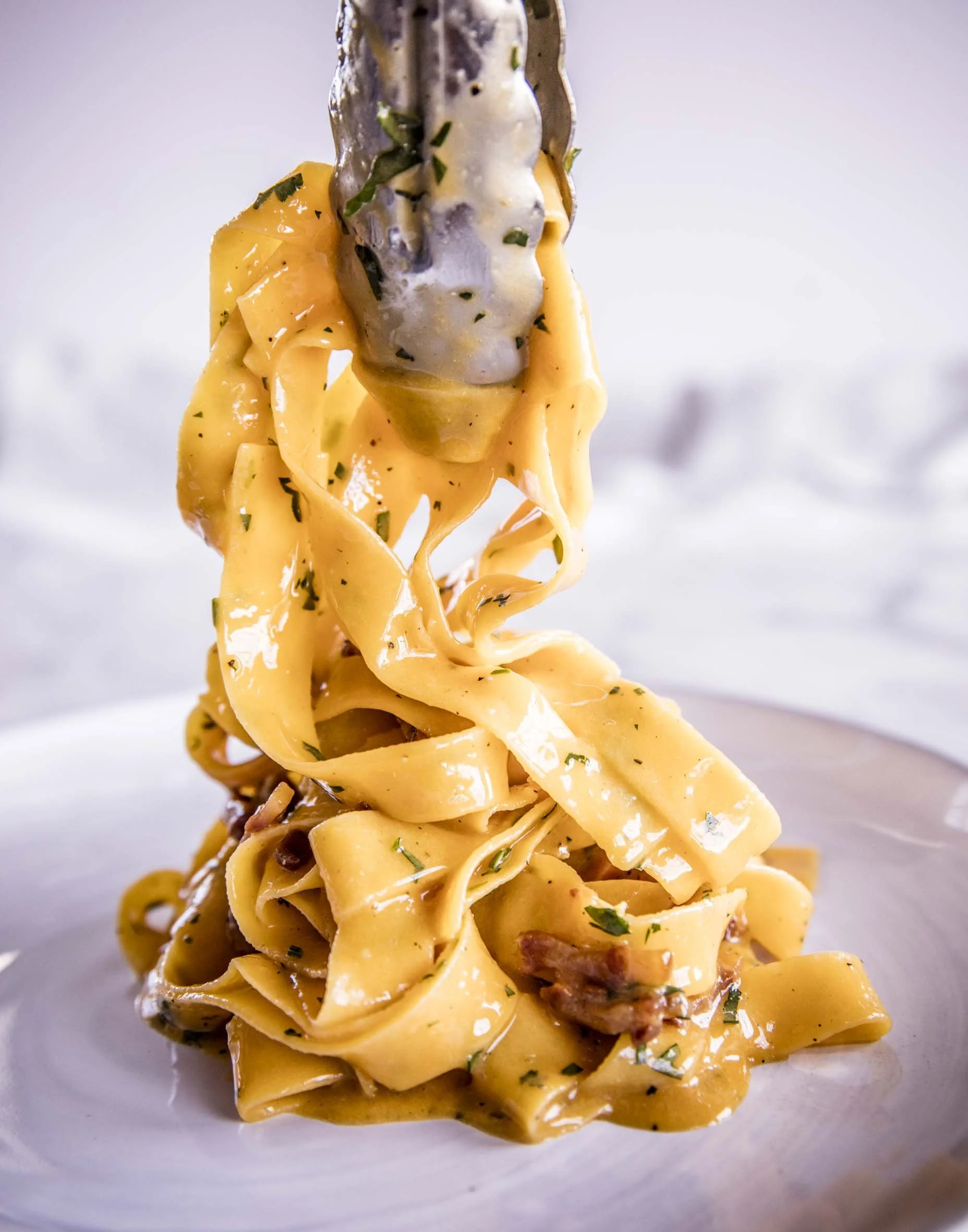
FETTUCCINE CARBONARA
Fettuccine Carbonara
Serves 6
Many myths surround the origins of this iconic pasta sauce. Some say the dish was made as a tribute to the carbon workers (carbonieri) or charcoal men, with the speckles of black pepper honouring them. Others believe the dish came about after the Allied liberation of Rome. The Americans brought with them an abundance of eggs and cured pork, and in gratitude the Romans created the dish. Whichever myth you choose to believe, carbonara is a firm favourite and we are glad to have it on our menu. The key to success is in the small details: making sure there is enough black pepper and parsley, and keeping the pan just hot enough to emulsify the eggs without scrambling them. And no cream! It truly is a work of art when it’s done right.
Ingredients
1 tablespoon olive oil
200 g pancetta or guanciale (cured pig’s cheek), thinly sliced
5 large eggs
120 g Parmigiano or pecorino, grated, plus extra to serve
2 tablespoons finely chopped flat-leaf parsley
Sea salt and cracked black pepper
Pasta Dough
500 g durum wheat flour, plus extra for dusting
6 x 60 g eggs
Pinch of salt
Method
To make the pasta dough, place all the ingredients in an electric mixer fitted with the dough hook. Mix on low speed for 6–8 minutes or until a dough has formed. Add a little water if required — the dough should be soft but not sticky. Wrap the dough in plastic film, then rest in the fridge for 2 hours.
Cut the dough into two or three pieces. Working with one piece at a time, roll the dough through the widest setting of your pasta machine, then fold it in half and roll it through again; repeat several times until the dough is silky and smooth. This is called laminating. Continue to roll the pasta through the machine, reducing the setting each time, until the dough is 1–2 mm thick.
Cut using the fettuccine attachment and dust with flour. If you don’t have a fettuccine cutter, flour the sheets thoroughly and stack them together, then cut with a sharp knife into 7 mm wide strips.
Heat the olive oil in a large frying pan over medium heat, add the pancetta or guanciale and cook until golden and crispy. Remove the pan from the heat.
Break the eggs into a bowl, add the cheese and parsley and season generously with salt and pepper. Whisk together well.
Bring a large saucepan of salted water to the boil, then add the fettuccine. Move the pasta around gently so it doesn’t stick, and cook for 3–4 minutes or until al dente. Drain, reserving 1 cup (250 ml) of the cooking water.
Return the frying pan to medium heat and warm the pancetta or guanciale. Add the pasta and toss so the oil and pancetta coat the pasta well. Remove from the heat and, working quickly, mix in the egg mixture with a pair of tongs, adding a little of the reserved pasta water to loosen it up a little — you want the eggs to be creamy and bound with the pasta, but not scrambled.
Serve immediately with extra grated cheese and a grinding of black pepper.