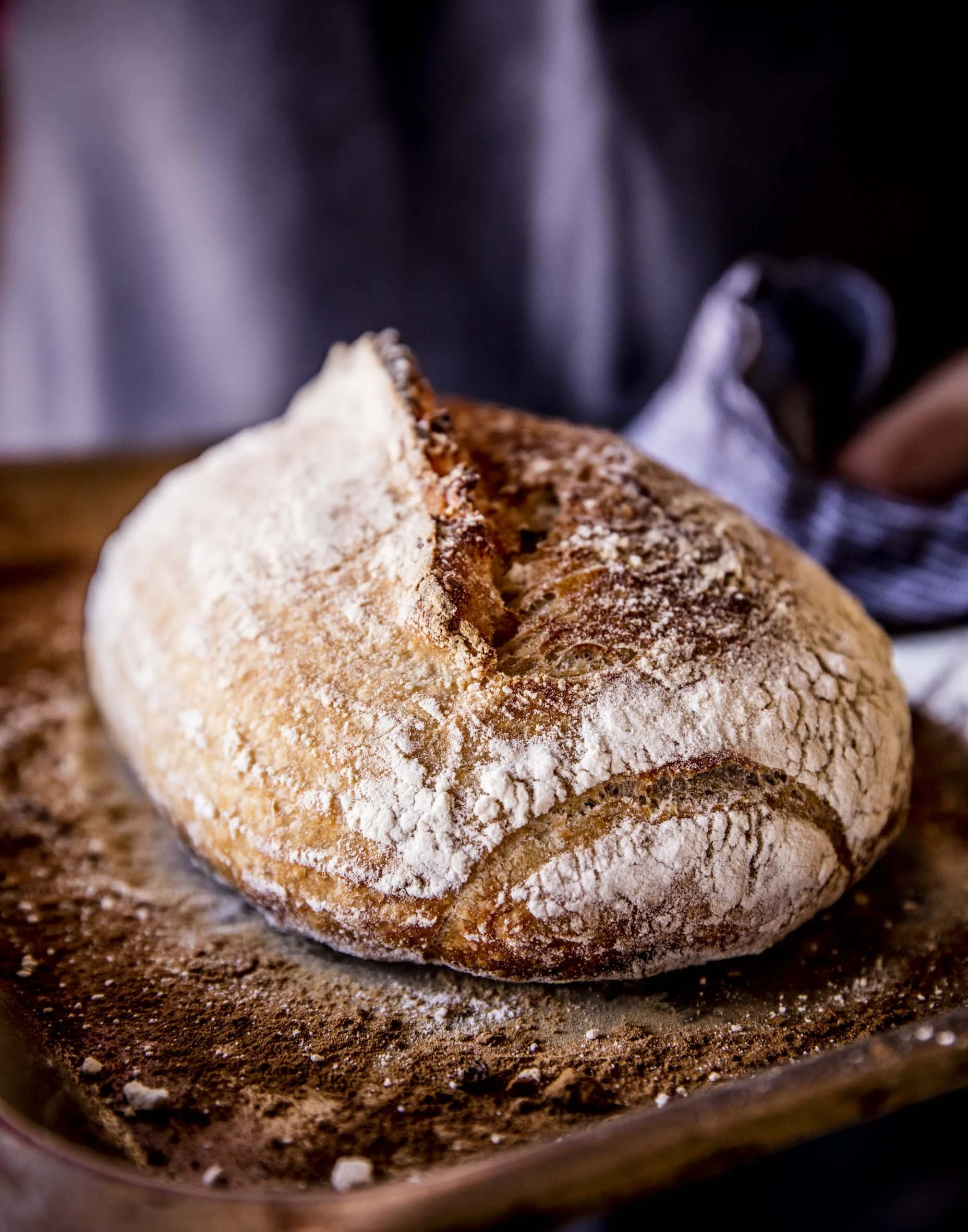
If there’s no bread, there’s no dinner.


When I travel I am always intrigued by the local food. Nourishment is a necessity for everyone, regardless of race or creed. If you look at all the cultures around the world you will find the miracle of bread in one form or another helping to fill the mouths of the hungry. Essential foods like bread typically begin life in a very basic form to ensure survival, then as time passes things start to change and necessity gives way to craft. After a more innovative approach takes hold we are left with a product that has its roots in a simpler time but shows the evolution brought by each new generation. This was never more evident than when I visited Giuseppe Di Gesu in my father’s home region of Puglia. The family has been baking bread in the city of Altamura for over five generations and it became a way of life. It was an inspiring trip. When I returned to Melbourne I was hell-bent on improving our bread and making it more amazing than ever.
‘If there’s no bread, there’s no dinner.’ That’s how it is in an Italian household and ours was no exception. My mum would always bake a little bread from scratch using some ‘mother’ dough she kept in the pantry. The loaf would sit proudly in the middle of our laminex kitchen table, all warm and crusty, tempting us until dinner was ready. Each family member had their own favourite part of the loaf – for example, my brother Antonio would hollow out the centre while I was more of a crust man. Of course this was sacrilege and it would irritate my father no end. (Ironically it happens today with my own children and nieces. The son becomes the father, I guess, because it annoys me now.) We’d try and save a bit until the end of the pasta so we could perform the ‘scarpetta’ (literally ‘make the little shoe’) and mop up all that delicious sauce from the bowl. Scarpetta is universal; it’s a ritual performed by Italians old and young, rich and poor. We serve fresh bread with all our meals at the Cellar Bar and I love seeing customers use it to mop up the pasta sauce. It’s the ultimate compliment, because you know it’s genuine!
With all this in mind we approached our bread for recipe with a renewed energy. We wanted a bread that had the homely feel of my own childhood experiences but also the artisan feel and flavour I saw that day in Altamura. Elegant but real. We decided on a sourdough recipe and developed our own ‘mother’ dough, Dorothy (Dot), a little like the one my mother had in her pantry all those years ago. We sourced a great flour grown and produced as close to home as possible which, as a milling practice, left most of the wheatgerm in the mix, keeping essential oils and flavours in the flour. This flour is blended with our own soft, sweet Melbourne tap water. The result is a classic Italian sourdough – crusty on the outside, light and airy on the inside, with a phenomenal depth of flavour.
No commercial yeast is required as Dot takes care of that for us. Every morning she gives birth to a new batch of starter, which we leave to bubble and squeak and grow for 48 hours before we bake it into beautiful loaves. A true sourdough mother, Dot has her own temperature-controlled room where she can relax and let the magical process of fermentation do its thing. She is massaged every day by loving hands and in return we get these rich caramelly, almost coffee-coloured loaves, alive with flavour.
We also make daily focaccia dressed with olive oil, salt and oregano which by no means plays second fiddle to the sourdough. It’s just a little different; softer, lighter and very Italian. It’s wonderful with antipasti.
In our kitchen bread is always respected and never wasted. You use it until it is too hard to eat, and then you make it into something else, such as bruschetta, breadcrumbs or crostini for soups and salads. When summer arrives we make panzanella salad; the bread from the day before is tossed with fresh tomatoes, olive oil and balsamic vinegar, revitalising the bread and creating a lovely light dish. Or I add pappa al pomodoro to the menu, a heartwarming tomato soup thickened with breadcrumbs and just a bit of seasoning. Recipes like this stem from the peasantry of Tuscany – simple, delicious dishes that take their inspiration from what can be grown and used to nourish the people around us.
In Italy every village has its own particular style of bread, and every village will tell you theirs is the best. The artisans who are entrusted with making the daily bread for the locals are as passionate about it as they are about their own children. They know how the elements affect their dough, how the local water lends it a certain sweetness, how the local flour provides the flavour of the region’s ‘terroir’, how the altitude affects the size of the air bubbles, even how the breeze coming off the sea before dawn changes the flavour of the crust! That fierce local pride and all-consuming passion is a beautiful thing. We share this approach to bread making, so naturally we think ours is pretty bloody good!