GROSSI PANE
Grossi Sourdough
Makes 2 Loaves
Our sourdough starter is alive and has been with us for years so we named her Dorothy. We know her well now so we just call her Dot for short.
To say bread is a cornerstone of Italian cuisine is the biggest understatement of our age. For my family bread is an integral part of our home life and, by extension, it’s a very important part of our kitchen. Since Dot’s inception the flavour of our bread has been developing day by day, month by month. What started as a quest to have great-tasting bread has turned into more of a relationship – every day we feed and nurture Dot, and watching her grow and produce fills me with an almost paternal pride. I guess she truly is an expression of the family home.
Ingredients
Dough
900 g unbleached plain flour, plus extra for dusting
100 g organic wholemeal flour
20 g fine salt
6 ice cubes
Dot (Starter)
75 g unbleached plain flour, plus extra for feeding
75 g organic wholemeal flour, plus extra for feeding
Method
To make the starter, mix the flours together. Pour 150 ml lukewarm water into a stainless steel bowl. Using clean hands, mix in the combined flours to make a thick batter with no lumps. Cover the bowl with a clean tea towel and place in a cool dark spot for 3–4 days. After 3 days check to see if any bubbles have formed around the edge of the bowl – if not leave for another day. If the bubbles are there and you can smell acidity and cheese then it’s time to start feeding the starter.
Discard 80% of the starter (about 240 g) and replace with 60 g plain flour, 60 g wholemeal flour and 120 ml lukewarm water to form a thick batter again.
Repeat the feeding process every 24 hours at roughly the same time of day. The starter will rise for hours after feeding and then collapse. It should take about 5 days to get the balance of yeast and bacteria right, and then you are ready to make your dough.
The day before you intend to make the dough, place 1 tablespoon of the starter in a large bowl and feed it with 200 g of the combined flour mix and 200 ml lukewarm water. Cover with a tea towel and leave overnight in a cool spot – by morning the starter will have risen by about 20%.
Once you have removed some of the starter for your loaves, continue to feed the remaining starter every day so it is alive and ready to use. The longer you keep it the more it will develop in both flavour and strength.
Measure 700 ml lukewarm water into a large bowl and mix in 200 g of the prepared starter to combine. Add the flours and mix in with clean hands until there are no more lumps of flour. Clean your hands and the side of the bowl with a pastry scraper, then cover the dough with a clean tea towel and allow it to rest for 45 minutes.
Mix the salt with 2½ tablespoons lukewarm water and add to the dough, squeezing with your hands to incorporate it. Transfer the dough to a clean container to start the fermentation.
For the next 2 hours turn the dough every 30 minutes, dipping your hand in water, grabbing the bottom of the dough and pulling it back over the top. Do this from every side.
During the third hour be gentler in your folding and try not to knock back the dough too much.
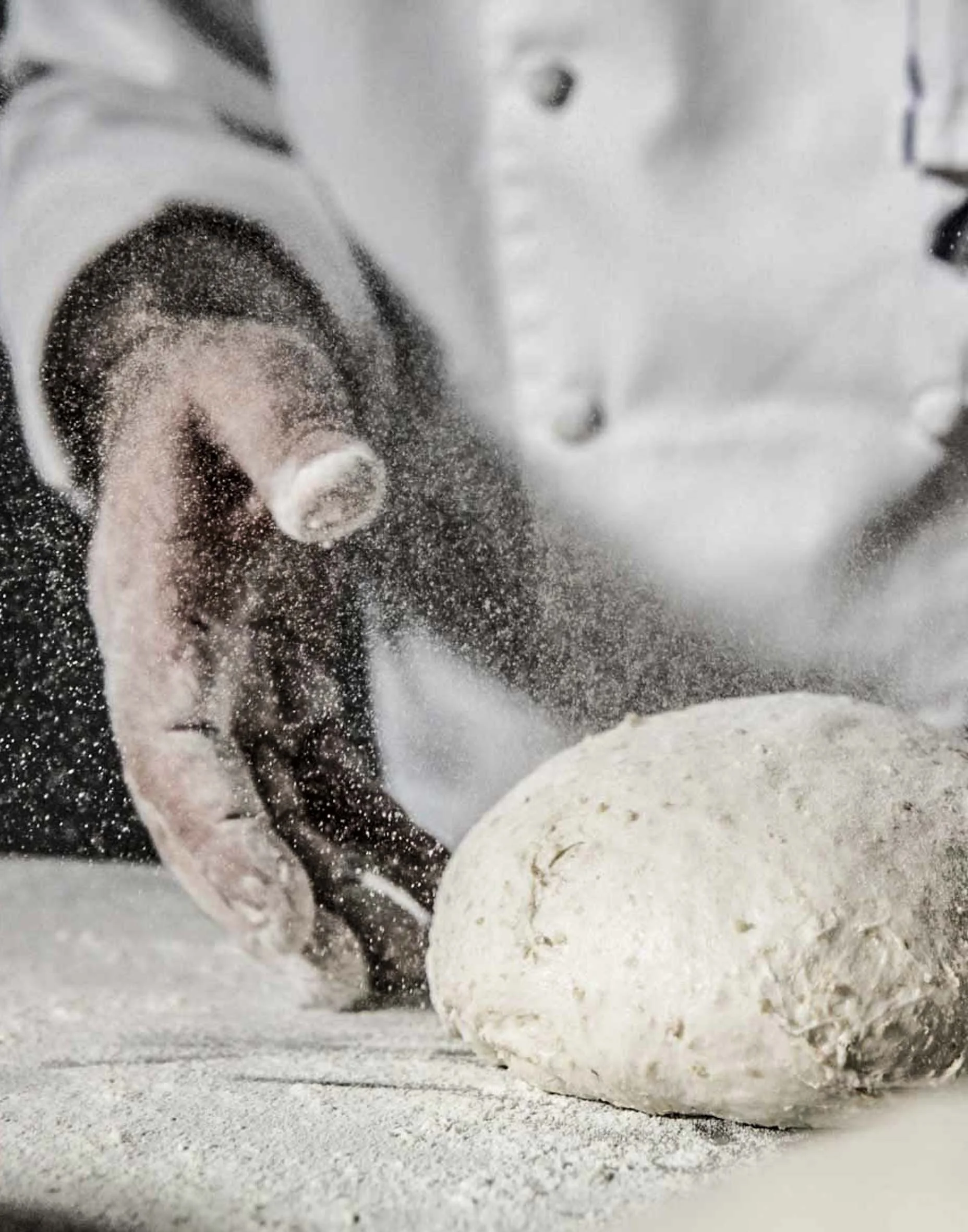
Scrape the dough out onto your workbench, lightly flour the top and cut it in half. Flip each piece over onto its floured side and, using a pastry scraper and your hand, form each piece into a ball, turning the dough as little as possible as you go. Cover the dough with a tea towel and allow it to rest on the workbench for 30 minutes, making sure there is no cold air blowing in the room.
For the final shaping you need to stretch and fold the third of the dough closest to you up and over the middle third of each dough ball. Repeat this folding action on the left side, the right side and the side furthest away from you.
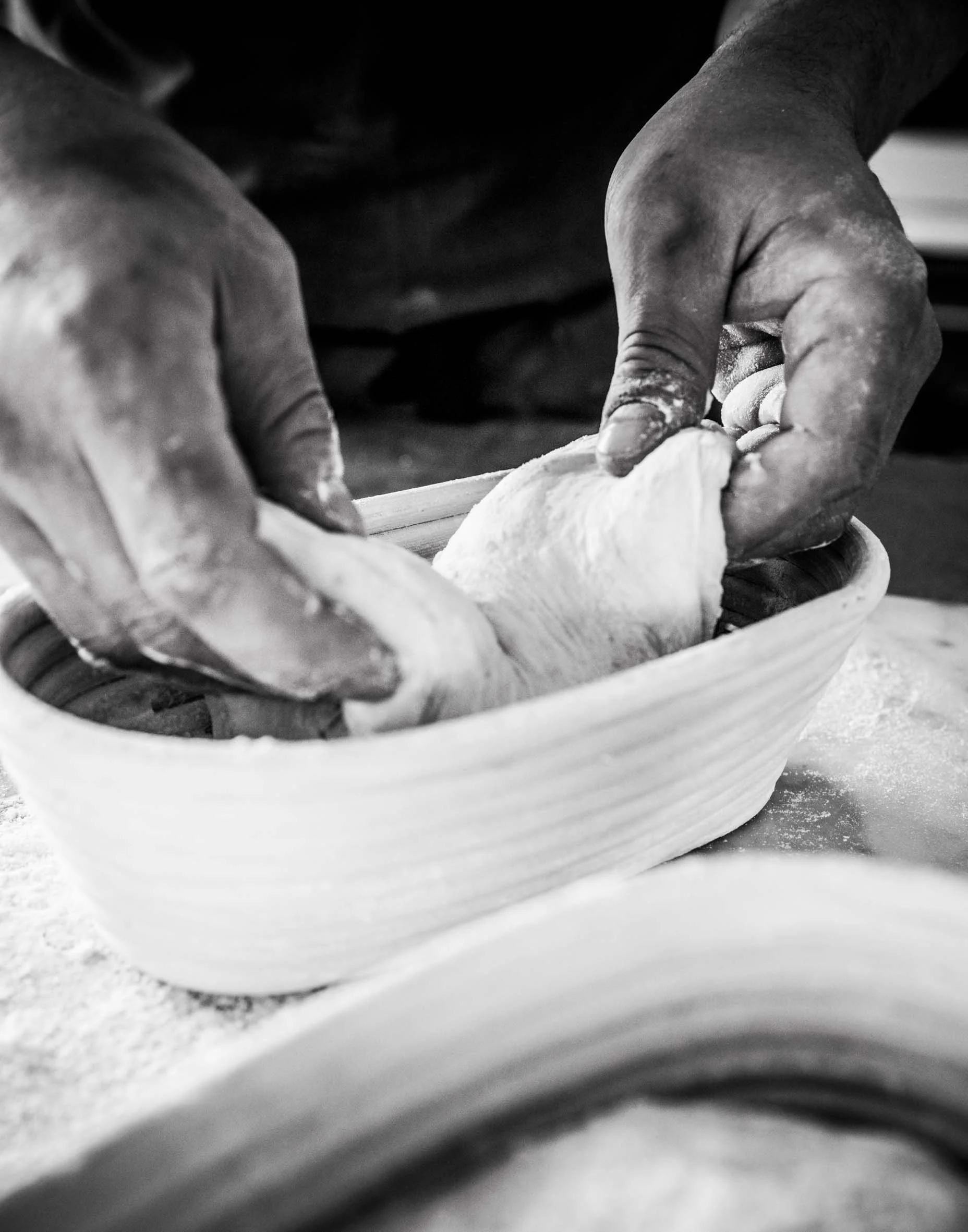
Line two baskets or bowls with a tea towel and dust with flour. Place a dough ball in each basket or bowl, seam-side up, and leave to rise in a warm spot for about 3 hours. Alternatively, you can slow-prove the dough in the fridge overnight, then take it out 40 minutes before baking.
Preheat the oven to 230°C. For this recipe I recommend using a conventional oven rather than fan-forced. Place a small roasting tin in the bottom of the oven to heat.
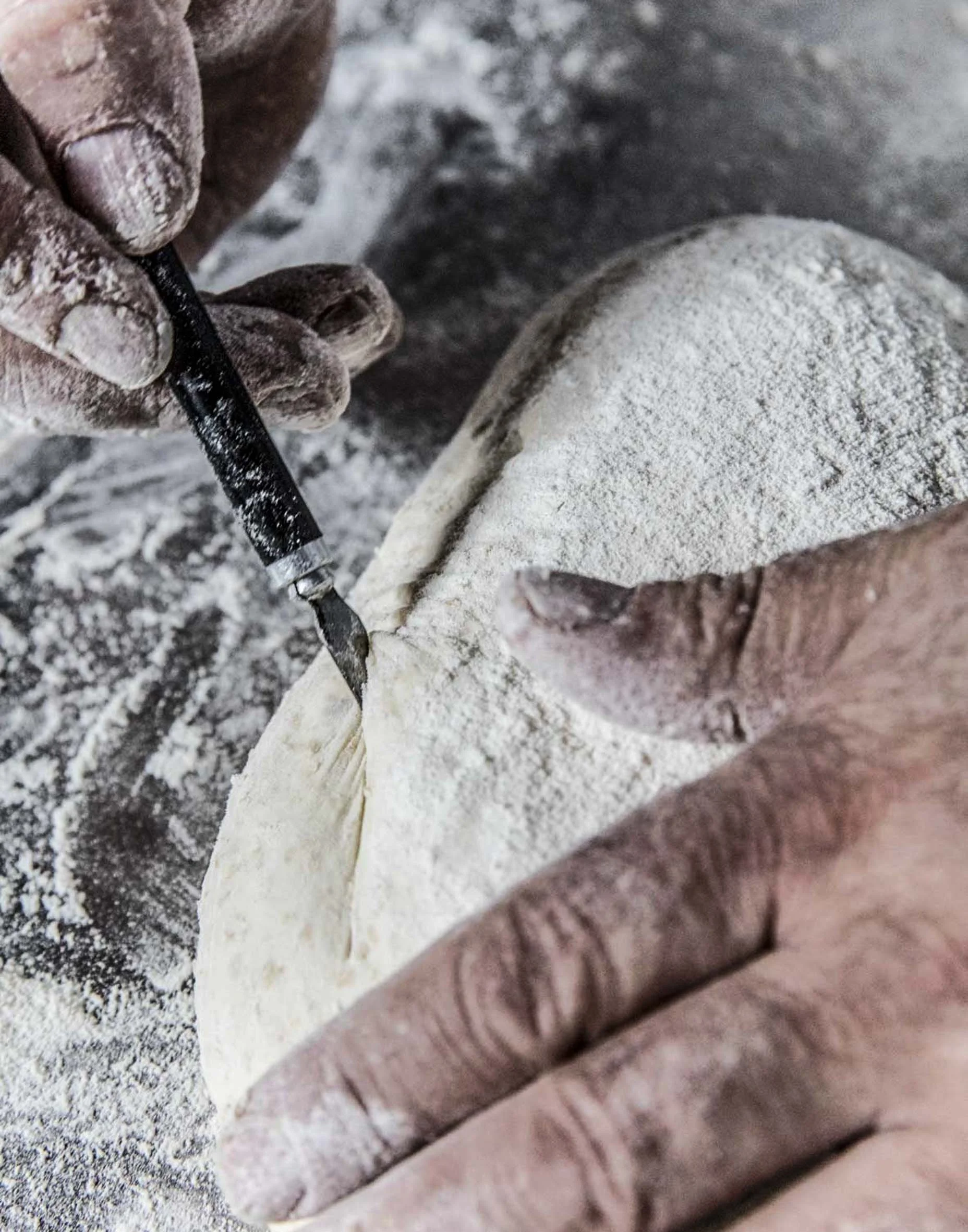
When the oven has reached temperature, lightly dust a large baking tray with flour. Carefully invert the dough from the baskets or bowls onto the tray, keeping the loaves well separated, and score the tops with a sharp knife. Place the ice cubes in the roasting tin in the oven, then slide in the tray with the loaves and bake for 35–40 minutes or until they sound hollow when you tap them on the bottom. Remove and rest on a wire rack for about 40 minutes before eating.