
Pizza Dough
Makes 10 x 250 g dough balls (enough for 10 pizzas)
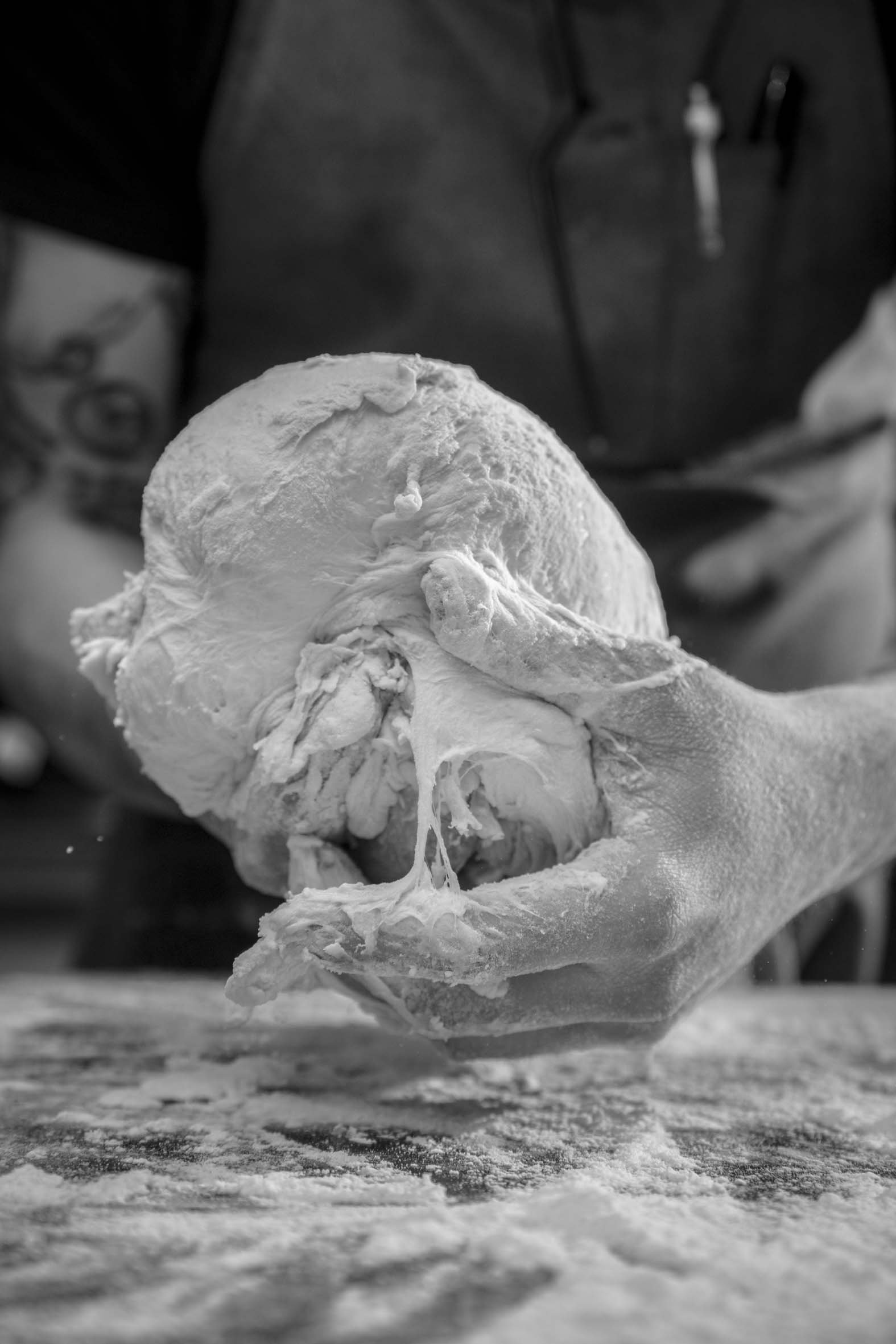
It was important that we had the right style of dough to form the base of all our pizzas. We wanted more of a Roman style of pizza, a lighter, crisper end result than the softer Neapolitan-style base that tends to droop in your hands. We experimented with different fermentation times and ultimately found the best time to be 48 hours. It gives the dough a better crumb, the right amount of chew and great blistering while also allowing the pizza to stand the weight of toppings. Noteworthy here is that we always use purified water in both the restaurant, which makes a big difference to the end product in both flavour and density. These elements gave us a great starting point for our pizza program.
Cooking pizza at home is like making pasta: it’s tactile. Once you start rolling it out everyone starts to get involved, getting their hands into the dough and making all sorts of shapes and rustic-looking bases. It’s moments like these it really brings people together, and the satisfaction of making something that you’ll then eat as a group is a truly fulfilling feeling.
Ingredients
8 g fresh yeast, crumbled, or 2 tablespoons dried yeast
1.6 kg good-quality strong pizza flour
2 tablespoons salt
Method
Dissolve the yeast in 1 cup (250 ml) of the water in the bowl of an electric mixer fitted with the dough hook. Add the flour and salt and mix on low speed, gradually adding 3 cups (750 ml) water. Once combined, increase the speed slightly and mix for 10–15 minutes or until the dough is smooth and elastic.
Transfer the dough to a container, cover and leave it in the fridge for 24 hours.
The next day remove the dough from the fridge, then cut and weigh it into 10 x 250 g pieces. Roll into balls and leave them on a floured tray covered with a clean tea towel to prove for another 24 hours in the fridge. The next day the dough will be ready to use.